
A Home Has Been Sitting for Months. Red Flag or Opportunity?
September 5, 2026
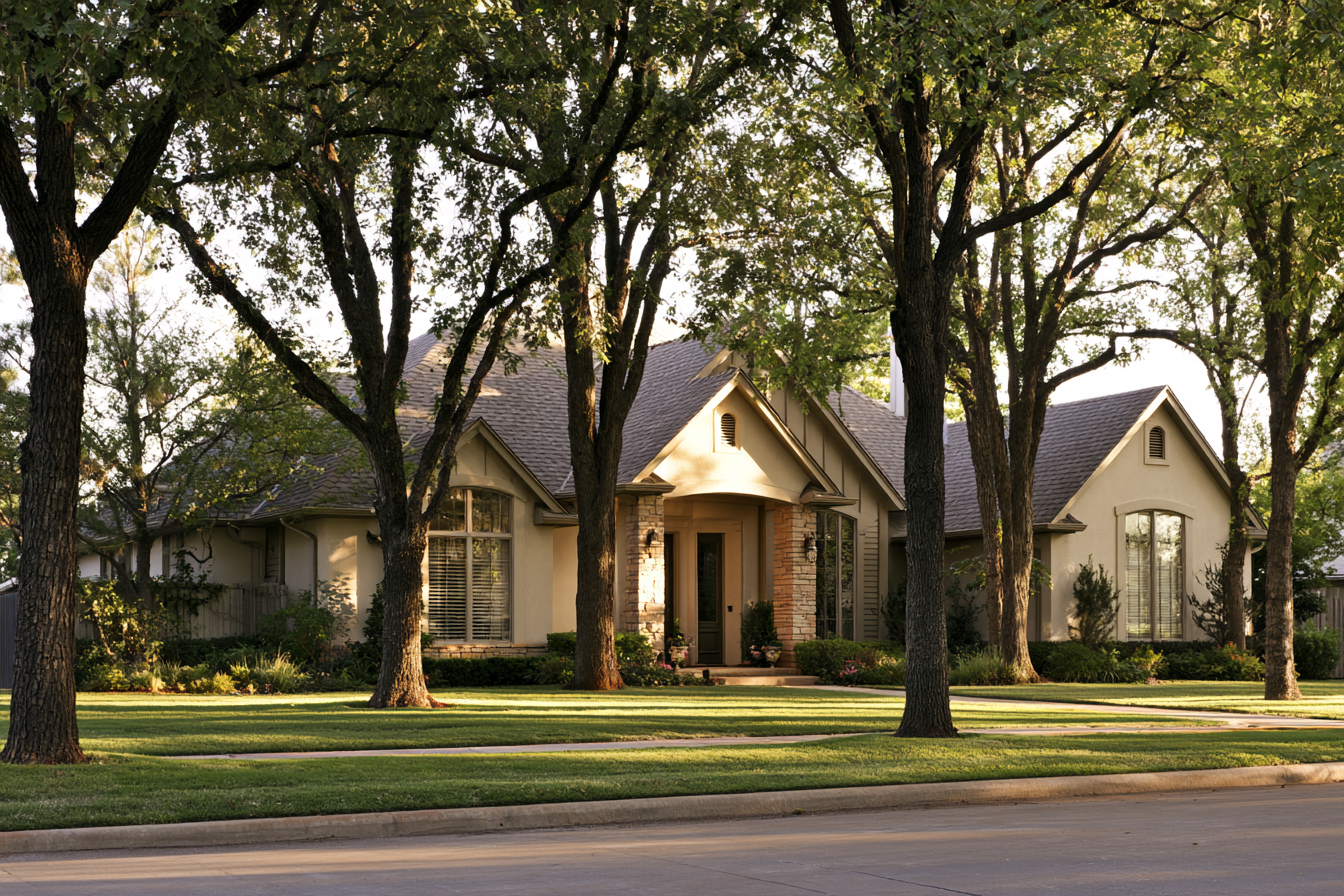
You find a home you like. The photos look good. The location works. The price is within range.
Then you notice it has been on the market for 60, 90, maybe even 120 days.
Immediately, the question comes up: What’s wrong with it?
Sometimes, something is wrong.
But not always.
In our work with Oklahoma City buyers, we have seen perfectly good homes sit on the market because they started at the wrong price, showed poorly online, hit the market at an awkward time, or simply had more competition than the seller expected.
We have also seen homes sit because buyers discovered legitimate concerns.
That is why days on market should be treated as a clue — not a verdict.
For a buyer willing to do a little homework, an older listing can sometimes create one of the better negotiating opportunities in the market.
Oklahoma City Buyers Have More Time to Be Selective
The market has changed enough that a longer listing history is becoming less unusual.
Nationally, 20.4% of active listings had a price reduction in August 2026, according to Realtor.com. Median time on market was 60 days.
Redfin reported a similar shift in late August. During the four weeks ending August 23, new listings reached their highest level since April while pending sales fell to a six-month low.
The numbers are particularly interesting in Oklahoma City.
Realtor.com reported that active Oklahoma City listings were up 7.8% from a year earlier in August. The median listing had been on the market for 55 days, and 23.8% of listings had experienced a price reduction.
That does not mean every buyer suddenly has unlimited negotiating power.
A well-priced home in a sought-after neighborhood can still move quickly. Another property a few miles away — or even in the same neighborhood — may sit because buyers simply do not see enough value at the asking price.
The real question is why the house has not sold.
1. It May Have Started at the Wrong Price
This is probably the first place we look.
Sellers sometimes price according to what they hoped the home would bring, what a neighbor received two years ago, or what they feel they have invested in the property.
Buyers do not price homes that way.
They compare the house with what else they can buy right now.
If similar homes offer a better combination of size, updates, lot, location and condition, buyers often pass over the overpriced property without ever making an offer.
Eventually the seller may reduce the price.
That is where buyers need to be careful.
A house that started at $600,000 and is now listed at $550,000 is not automatically a $50,000 bargain. The important question is whether $550,000 makes sense compared with recent sales and current competition.
The original asking price is largely irrelevant to that calculation.
2. The House May Be Better Than the Listing
Some homes do themselves no favors online.
Poor photography, dark rooms, too much clutter, an incomplete description or the absence of a floor plan can dramatically affect how buyers respond to a listing.
Most buyers make their first decision from a screen.
If the listing does not create enough interest to get them through the front door, the home can be overlooked even when there is nothing fundamentally wrong with it.
Heather and I have both seen homes where the reaction after walking inside is essentially, “This is much better than the pictures.”
For a buyer, that can be useful.
You may be looking at a property whose problem is marketing rather than real estate.
3. Condition May Be Shrinking the Buyer Pool
There is an important distinction between a house that needs updating and a house with significant physical problems.
Avocado-green tile or an older kitchen may not bother you at all. In fact, cosmetic condition can create an opportunity if other buyers want something completely updated.
A roof nearing the end of its useful life, active water intrusion, structural movement, outdated electrical components or an insurance issue deserves a different level of attention.
Those items can affect more than what you spend remodeling after closing. They may affect financing, insurability and the ongoing cost of ownership.
This is where inspections and professional estimates matter.
The question is not simply, “Does this home need work?”
It is, “Does the price adequately compensate me for the work and risk I am taking on?”
4. Find Out Whether It Has Been Under Contract Before
A listing that returns to the market often makes buyers suspicious.
But a failed contract does not automatically mean the inspection uncovered a disaster.
Buyers lose financing. Jobs change. Personal circumstances change. Sometimes the parties simply cannot agree on repairs.
Other times, however, an inspection does reveal something important.
Ask what happened.
Your real estate agent can review the listing history, ask the listing agent why the previous contract ended and determine whether disclosures, invoices, inspection information or completed repair documentation are available.
Do not assume there is a problem.
But do not ignore the history either.
5. The Seller’s Circumstances May Have Changed
Time has a way of changing negotiations.
A seller who rejected an offer shortly after listing may view the same offer very differently two months later.
Their next home may now be ready. They may have moved already. Their preferred closing date may have changed. Or several competing listings may have sold while theirs remains available.
On the other hand, some sellers have no particular deadline and substantial equity. They may be perfectly willing to wait rather than accept an offer they consider too low.
That is why “motivated seller” can be a misleading phrase.
The better approach is to understand what matters to the seller besides price.
Sometimes a flexible closing date, fewer complications or another reasonable term can be more useful in a negotiation than simply lowering the offer another few thousand dollars.
What We Investigate Before Making an Offer
When an Oklahoma City buyer becomes interested in a home with a long listing history, we want to understand the entire story.
That includes how long the property has actually been available, whether it was previously listed or temporarily withdrawn, every significant price change, any prior contracts, available disclosures and known repair history.
Then we look at the current market.
What have comparable homes actually sold for? What else could the buyer purchase today? Has competing inventory been sitting too? Are there significant first-year expenses such as a roof, HVAC system, insurance issue or major updating?
Only then does the number of days on market become useful.
Don’t Confuse Negotiating Leverage With a License to Lowball
A home that has been sitting for several months may give you more room to negotiate.
But there is a difference between taking advantage of leverage and submitting an offer with no market support.
An extremely low offer can cause the seller to focus on the size of the discount rather than begin a useful negotiation.
We would rather build a case.
If the comparable sales support a lower value, show it. If the home needs substantial repairs, account for them. If competing listings provide better value, factor that into the strategy.
A thoughtful offer gives the seller something concrete to consider.
That does not guarantee they will accept it.
It does give the buyer a much stronger negotiating position.
An Older Oklahoma City Listing Can Be Worth a Second Look
With Oklahoma City inventory higher than it was a year ago and nearly one-quarter of listings showing price reductions in Realtor.com’s August data, buyers have more reason to revisit properties they may have passed over earlier.
Some of those homes are still overpriced.
Some need more work than the price justifies.
And some are good houses that simply missed the market the first time around.
The goal is not to find the seller who is most desperate.
It is to find a home that works for you, understand why it has not sold, and determine what it is reasonably worth today.
If you are considering an older listing in the Oklahoma City area, Heather and I are happy to help you look beyond the days-on-market number and understand what the property’s history may actually be telling you.

Luxury Specialist at McGraw Realtors
Bill Wilson has helped buyers and sellers throughout the Oklahoma City metro since 1995. A former U.S. Air Force fighter pilot and business owner, he brings a disciplined, practical approach to real estate. Bill works alongside his daughter, Heather Wall, helping clients navigate luxury, move-up, and distinctive properties across Oklahoma City, Edmond, and surrounding communities.