
Living With Your Parents? Make It Your First Step Toward Homeownership
November 14, 2026
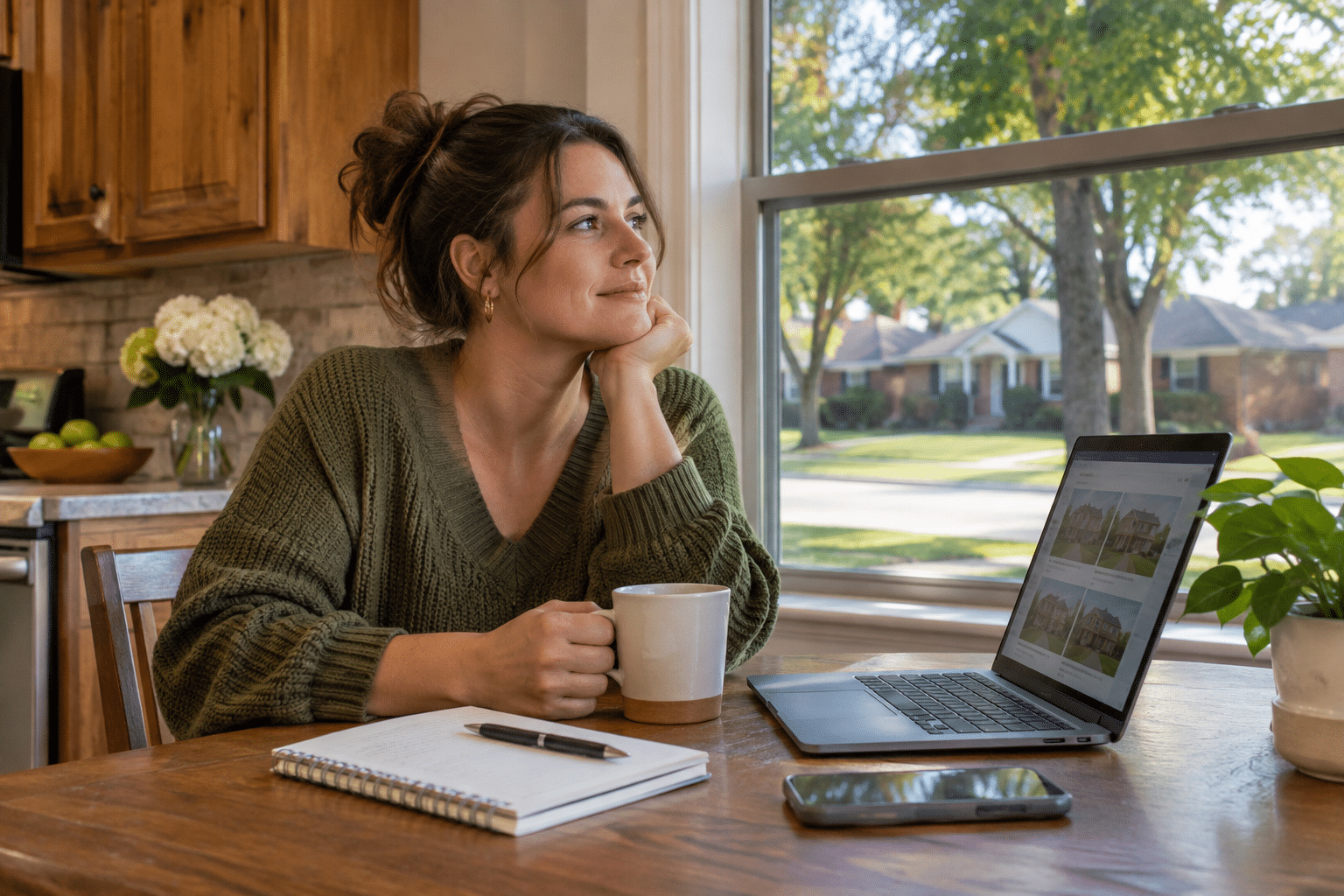
A college degree. A steady job. A decent income.
Not long ago, those were usually enough to get a young adult started on an independent life. Today, plenty of people have all three and are still living in their childhood bedrooms.
According to a June 2026 Realtor.com study, 33% of Americans under 35 live with their parents. That’s more than 25 million young adults, and roughly seven in ten of those ages 25 to 34 have jobs.
It’s easy to assume they’re simply putting off adulthood. The numbers tell a different story.
For many, living at home is a financial decision. And if buying a home is the eventual goal, it can be a smart one.
The important question is what you’re doing with the opportunity.
The Housing Market Has Changed. So Has the Path to Buying.
Nationally, Realtor.com reports that median listing prices have increased 34.4% since 2019, while asking rents have risen 17.9%.
Those increases make it harder to save while paying rent, particularly for someone early in their career.
The trend is showing up in homebuyer ages, too. The National Association of Realtors’ 2026 research puts the median age of a first-time homebuyer at 40. Realtor.com Economic Research+1
Forty.
That’s quite a change from the days when buying your first house in your twenties was a fairly ordinary milestone.
Of course, Oklahoma City isn’t the national housing market. Our home prices, neighborhoods, and available housing options are different from those in many larger metropolitan areas.
A first-time buyer looking in Northwest Oklahoma City may have different choices than someone hoping to buy in Edmond, Deer Creek, or Piedmont. Even within the same community, the price difference between an older home and newer construction can be substantial.
That’s why I encourage buyers to begin with their own financial situation and the homes available locally, rather than relying on national affordability headlines.
How Much Do You Actually Need for a Down Payment?
One of the biggest misconceptions about buying a first home is that you must save 20% of the purchase price.
You don’t.
Depending on the loan program and your qualifications, some conventional mortgages allow down payments as low as 3%. FHA loans generally allow qualified buyers to put down 3.5%. Eligible VA and USDA borrowers may qualify for financing without a down payment.
Consider a hypothetical $250,000 home in the Oklahoma City area.
| Down payment | Amount needed |
|---|---|
| 3% | $7,500 |
| 3.5% | $8,750 |
| 5% | $12,500 |
| 10% | $25,000 |
| 20% | $50,000 |
Illustrative down payment amounts only. Closing costs, prepaid expenses, mortgage insurance, and other financing requirements are not included.
That’s a considerable difference between the amount many young buyers think they need and what certain loan programs actually require.
A smaller down payment generally means borrowing more, and it may increase mortgage insurance costs. So the goal isn’t necessarily to put down as little as possible.
It’s to find the right balance between your upfront cash, comfortable monthly payment, and money left in reserve.
For a closer look at the available options, our earlier article on down payment help in Oklahoma City explains several ways buyers can reduce their initial expenses.
If You’re Living at Home, Give Your Savings a Purpose
There’s a difference between spending less money and deliberately saving for a house.
Suppose you’re living with family and can consistently set aside $1,000 each month. Over two years, that’s $24,000 before any interest earned.
That could make a meaningful contribution toward the down payment and closing expenses on a first home.
But I would suggest going a little further than simply opening a savings account.
Start by estimating your future housing payment.
Look at what you could comfortably afford each month, including the mortgage, property taxes, homeowners insurance, and any mortgage insurance or HOA dues.
Then try living with that budget before you buy.
If your future housing expenses are expected to be $1,800 a month and you’re currently contributing $500 toward household expenses, consider saving the $1,300 difference.
You’re accomplishing two things at once. You’re building savings and testing whether that future payment fits your lifestyle.
Keep some money beyond the down payment.
Buying a home brings expenses that don’t show up in the listing price.
There are inspections, moving costs, utility deposits, and the inevitable things you’ll want to purchase once you move in.
And houses need maintenance.
I’ve always felt that buyers are better served by purchasing a home they can comfortably maintain than by stretching to qualify for the most expensive house a lender will approve.
Pay attention to your credit and existing debt.
Your income matters when qualifying for a mortgage, but so do your credit history and monthly debt obligations.
A substantial car payment or credit card balance can affect your purchasing power.
Sometimes improving those numbers is more useful than adding another few thousand dollars to your savings.
Oklahoma Has Programs Worth Investigating
First-time buyers in Oklahoma have another potential advantage: state-sponsored homebuyer assistance.
The Oklahoma Housing Finance Agency (OHFA) offers financing programs that can help eligible buyers with down payment and closing costs.
Its current homebuyer assistance options include assistance equal to 3.5% of the total loan amount, subject to program requirements. Some programs are available to repeat buyers as well as first-time buyers. Oklahoma Housing Finance Agency+1
There are income limits, purchase-price limits, credit requirements, and other qualifications that vary by program.
The details matter.
A program that looks attractive because it reduces your upfront expenses may have different interest rates or long-term costs than another financing option.
I’d encourage anyone considering assistance to compare the complete loan terms with a participating lender, not just the amount of money available at closing.
Our guide to first-time buyer down payment assistance in Oklahoma provides additional background, although current program terms should always be confirmed directly with OHFA or an approved lender.
Don’t Wait Until You’re Ready to Buy to Talk With a Lender
This may be the most useful advice I can offer someone who hopes to buy a home in the next year or two.
Talk with a mortgage lender now.
You don’t need to be ready to make an offer. You don’t even need to know which neighborhood you want to live in.
A good lender can help you understand what you might qualify for today, how much cash you’ll need, and which changes could improve your position.
I also recommend comparing two or three lenders. Ask about interest rates, estimated closing costs, mortgage insurance, and down payment assistance.
You may discover that your savings goal is closer than you thought.
Or you may learn that paying off a particular debt, improving your credit, or saving for another six months would put you in a much stronger position.
Either answer is useful.
Your First Home Doesn’t Have to Be Your Forever Home
It’s natural to imagine your first home with all the features you’d eventually like to have.
But there’s a reason we call it a first home.
For someone buying in the Oklahoma City metro, that might mean considering an established neighborhood instead of newer construction, a smaller house instead of a larger one, or a different location that offers better value.
None of those choices necessarily means settling for a bad house.
The condition of the property, likely maintenance expenses, resale potential, and how long you expect to live there all deserve consideration.
A well-maintained, modest home that fits your budget can be a much better first purchase than a larger property that leaves you financially stretched.
And there’s nothing wrong with continuing to rent or live with family if buying doesn’t yet make sense for your circumstances.
Living at Home Can Be a Starting Point, Not a Holding Pattern
Living with your parents at 25 or 30 isn’t the milestone most people pictured when they were younger.
But the financial realities of buying a home have changed, and there’s little value in measuring your progress against someone else’s timeline.
If living at home allows you to build savings, reduce debt, and prepare for the responsibilities of homeownership, that time can be well spent.
Give yourself a realistic savings target. Learn what you can afford. Understand your financing options. And make sure the home you eventually purchase fits the life you’re building.
When you’re ready to explore what that might look like in Oklahoma City, Edmond, or the surrounding communities, Bill and I would be happy to help you understand your choices.
The goal isn’t simply to move out. It’s to move forward on solid financial footing.

REALTOR® at McGraw Realtors
Heather Wall helps buyers and sellers throughout the Oklahoma City metro, with a focus on Edmond, Deer Creek, and Northwest Oklahoma City. As part of OKCHomeSellers at McGraw Realtors, she works alongside her father, Bill Wilson, combining attentive communication, practical guidance, and local market knowledge to help clients make confident real estate decisions.